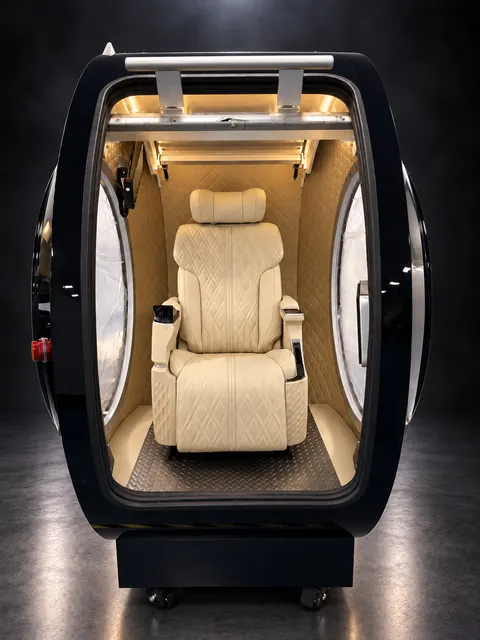
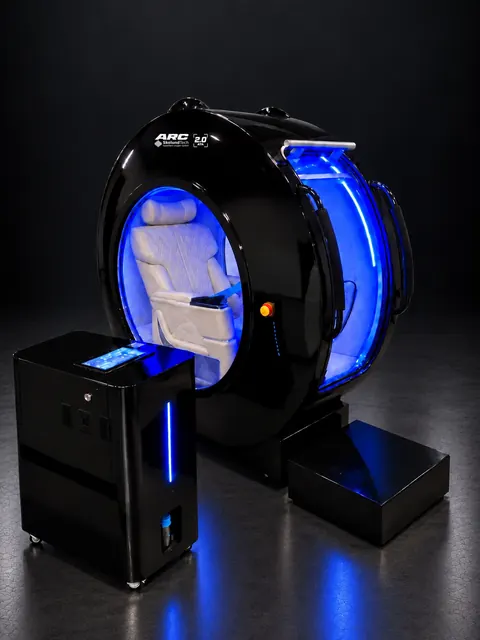
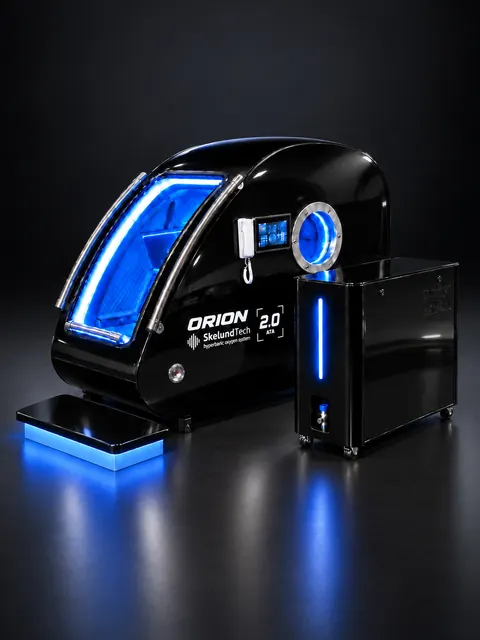
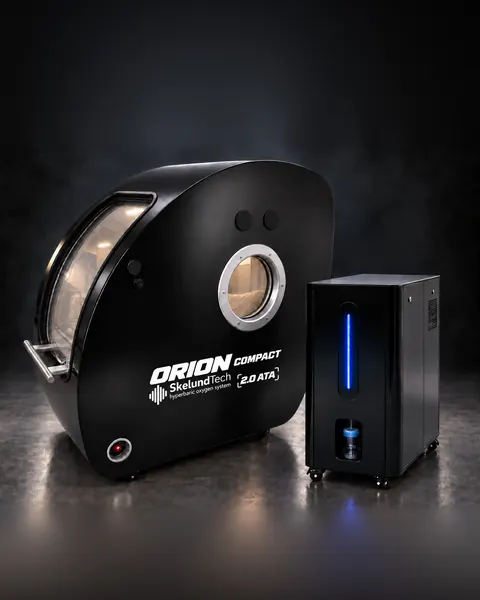
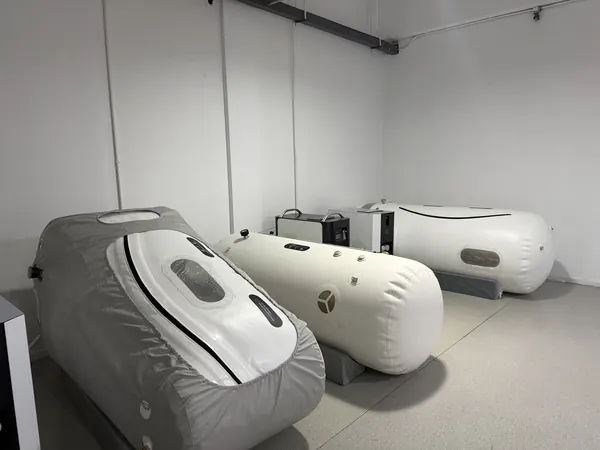
Three options, in order of simplicity: LUMEN travels as a 770 mm central body plus two side modules; ORION COMPACT is about 500 kg on wheels at 830 mm wide; and for rooms that only stairs can reach, a segmented chamber built in flanged sections of about 100 kg each — our completed HORIZON design, and the basis of a recent proposal for a duplex apartment in the UK. Every route is checked against drawings before production.
Watch
UK custom chamber proposal
The UK case study on video: a duplex reached only by a spiral staircase, a 2.0 ATA lying chamber engineered in sections of about 100 kg, and the evidence shown to the client — flanges, welds, window and door tests, 20L + BIBS and a full 2.0 ATA test run.
Why stairs are the hard case
Our hard-shell chambers weigh about 500 kg (ORION COMPACT) to 1,185 kg (ORION) and are 830 to 1,400 mm wide. On the ground floor that is a forklift-and-pallet-truck job. A lift turns it into a question of door size and rated load — ORION COMPACT was developed for exactly that. A staircase is different: a one-piece steel vessel of this weight is rarely something a stair team can carry up a domestic flight of stairs, and hoisting through a window is often impossible, as in the UK apartment described below. The chamber has to become smaller, lighter, or both.
Three ways a chamber gets smaller
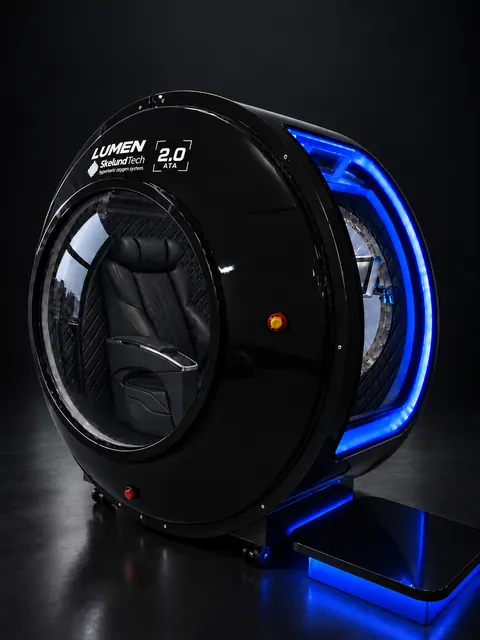
- Modules that come off — LUMEN. The side modules unbolt from the central body, which is 770 mm wide; the outer covers come off first. The parts go up separately and the chamber is reassembled in the room. Weight still has to be carried, so a stair team and the floor loading are part of the plan.
- Glass that comes out — ARC. Both side glass panels remove for an 860 mm handling width, or the flat PC-window version is 860 mm as built. ARC is about 720 kg.
- A compact chamber on wheels — ORION COMPACT. 1,450 × 830 × 1,450 mm and about 500 kg, with a separate main unit on wheels — made for lifts, and the lightest one-piece hard-shell we build.
Segmented chambers
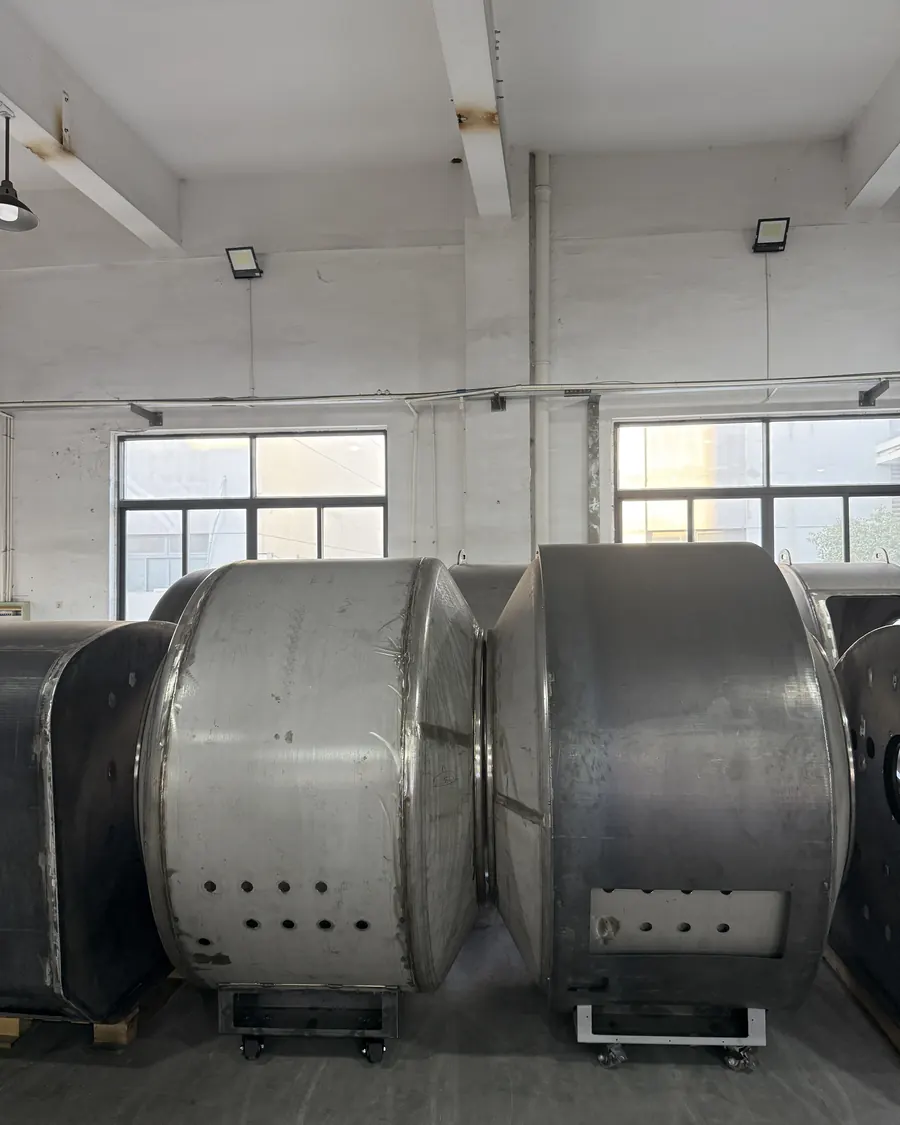
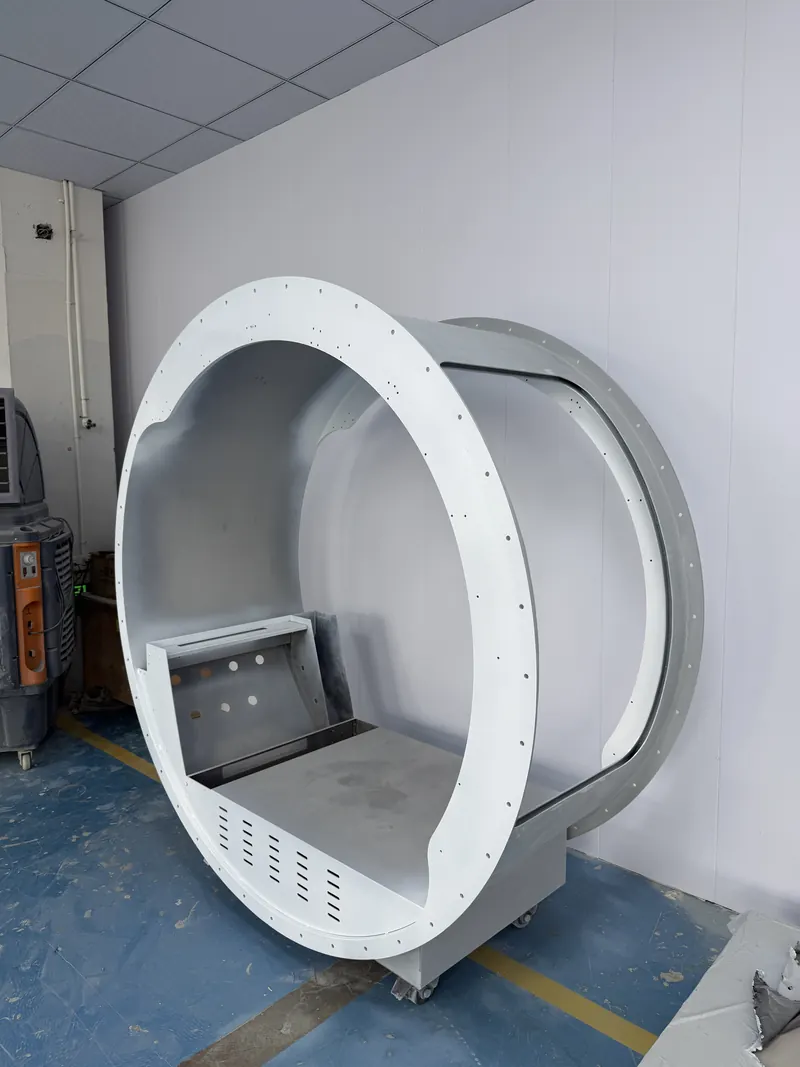
When even a 500 kg chamber cannot be carried up, the answer is to build the chamber in sections light enough for people to carry. HORIZON is our completed design for a segmented lying chamber: flanged sections of about 100 kg each (the design target), joined and separated with flange rings. It is a completed design, not a model in production, and it is engineered per project.
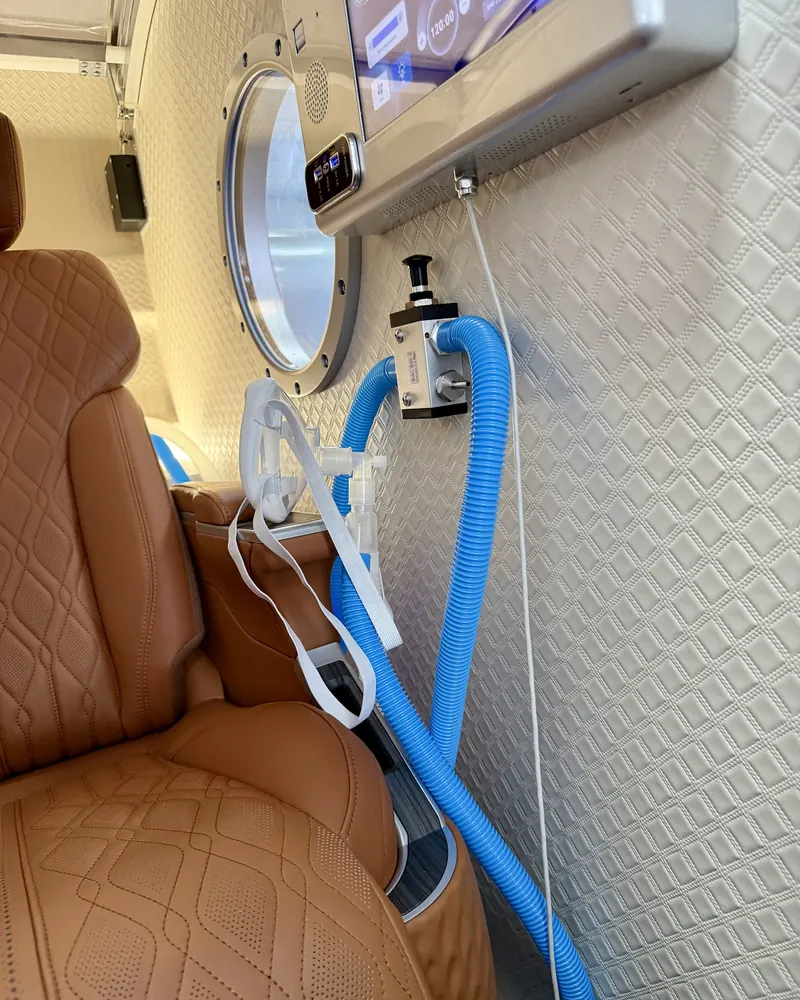
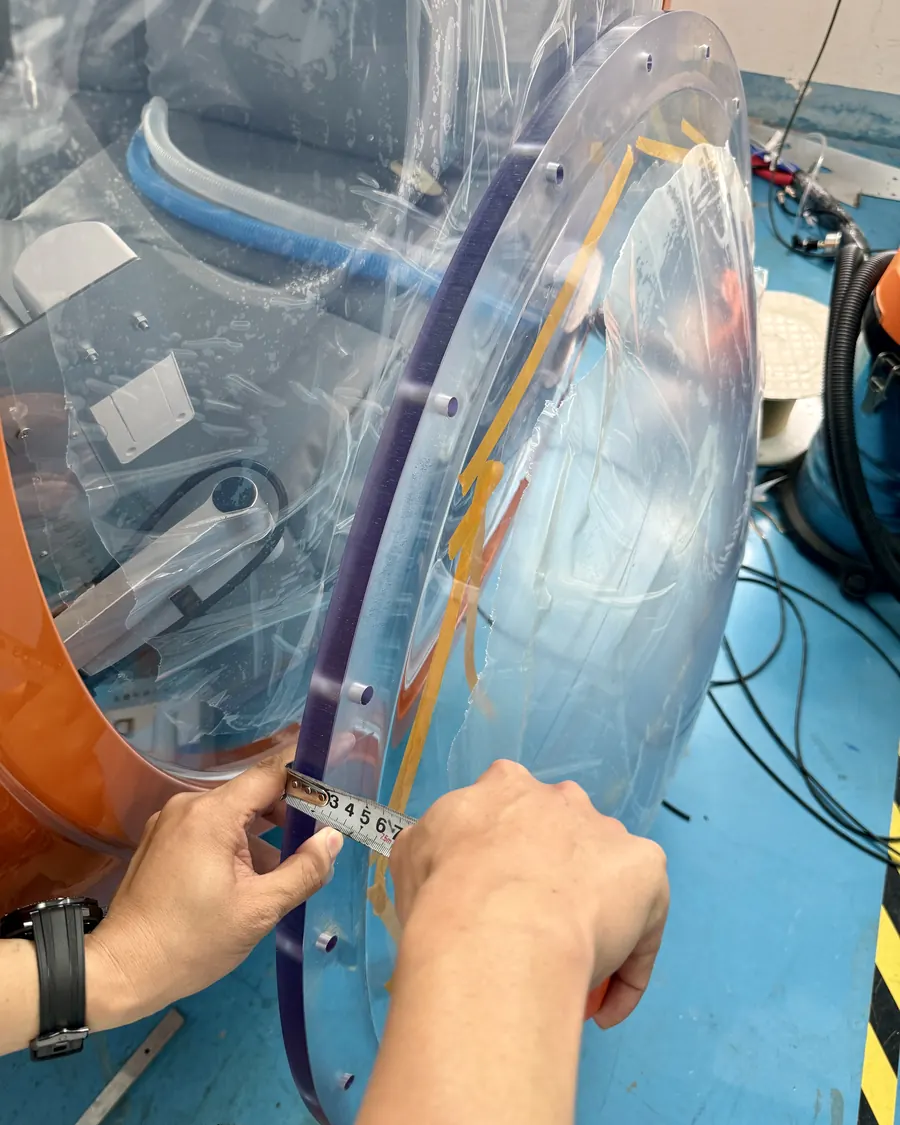
The most recent application is a proposal for a client in the United Kingdom: a duplex apartment, the chamber room on the upper floor, an internal staircase, no lift and no window that could be removed. The client already owned a 1.5 ATA soft chamber and wanted 2.0 ATA. Our engineers proposed a round lying chamber about 1 m in diameter in sections of roughly 100 kg, with drawings and renderings, flange details, welding samples showing the reinforced door section, real stainless-steel sections and a similar segmented chamber from another project, a polycarbonate window and door test, the 20L main unit with BIBS, a full test run at 2.0 ATA and an illuminated entry step. The client checked the sizes with a paper model built from our renderings. No order has been placed; names are withheld. More in the soft-to-hard-shell guide.
How a flange joint works
A flange is a ring welded to the end of a shell section with bolt holes around it. Two sections meet flange to flange with a seal between them and are bolted around the circumference; when the bolts are torqued the two sections behave as one pressure vessel. Joints are tack-welded, fully TIG-welded and ground, and the door section is reinforced; in the third-party type test to EN 286-1 on our hard-shell chambers, every applicable welding requirement passed. LUMEN's side modules join its central body the same way, with metal covers over the joint. On a segmented lying chamber the flanges carry the full 2.0 ATA load at every joint, which is why the flange details, the weld preparation and the seal are the part of a proposal we document most carefully — and why a segmented chamber would be assembled and tested at pressure in our factory as a complete system before being separated for shipping — the same rule as for every chamber we ship.
What we need from you
- Photographs and measurements of the staircase: width between walls and handrails, headroom, each turn and landing, and the door at the top.
- The narrowest point anywhere on the route, from the street to the room.
- The floor level and the floor construction of the room, for the loading check.
- How many people can be on site to carry, and whether stair-climbing equipment is available locally.
- Your intended use and the pressure you want — it decides whether a modular production model or a segmented design is the right answer.
Reassembly on site
Chambers that travel in parts come with assembly drawings, and our factory team guides the reassembly remotely, in text with photographs. Factory assembly on site can be agreed as a paid service. After reassembly the chamber is run with its main unit before first use, following the operation manual packed in the crate. Support afterwards is the same as for any of our chambers: remote diagnosis and replacement parts free of charge, with express freight the only cost when you need them fast.
Questions
Can HORIZON be ordered now?
HORIZON is a completed design, not a production model. It is engineered per project — drawings and specification first, then a quotation — so the answer is yes, as a custom engineering project.
Can LUMEN's modules be carried by hand?
The modules are lighter than the complete chamber but still heavy steel parts; a stair team with suitable equipment is needed, and we confirm the weights and sizes of each part with the drawings before you order.
Is a segmented chamber as safe as a one-piece chamber?
It is designed as a pressure vessel with flanged joints and, like every chamber we ship, would be tested as a complete assembly in our factory before dispatch. We make no claims beyond the tests and documents for your project, which we share with you.
Sources
- SkelundTech hard-shell model documentation, October 2026
- SkelundTech engineering project records: HORIZON (design completed) and ATLAS
- Custom proposal prepared by SkelundTech engineering for a client in the United Kingdom (proposal stage; client details withheld)